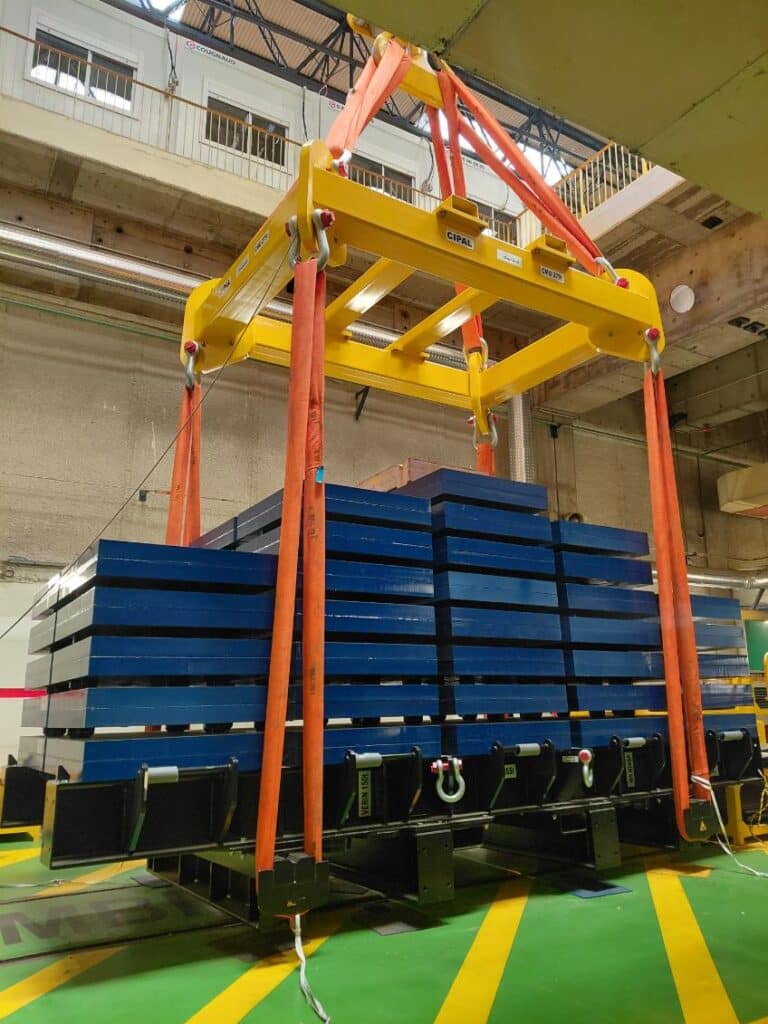



The test bench for lifting equipment is a precision handling device. CIPAL designs and manufactures it to order for the regulatory load testing of overhead travelling cranes. It thus adapts to the specific constraints of each installation. It reproduces real operating conditions up to the maximum required loads.
Test bench — a robust architecture for real-world testing conditions
The test bench combines a cradle and a frame lifting beam working together. The cradle receives the ballast weights required to reach the test load. Positioned above, the frame lifting beam then distributes forces evenly via a four-leg sling. This architecture thus guarantees the safety and repeatability of every test.
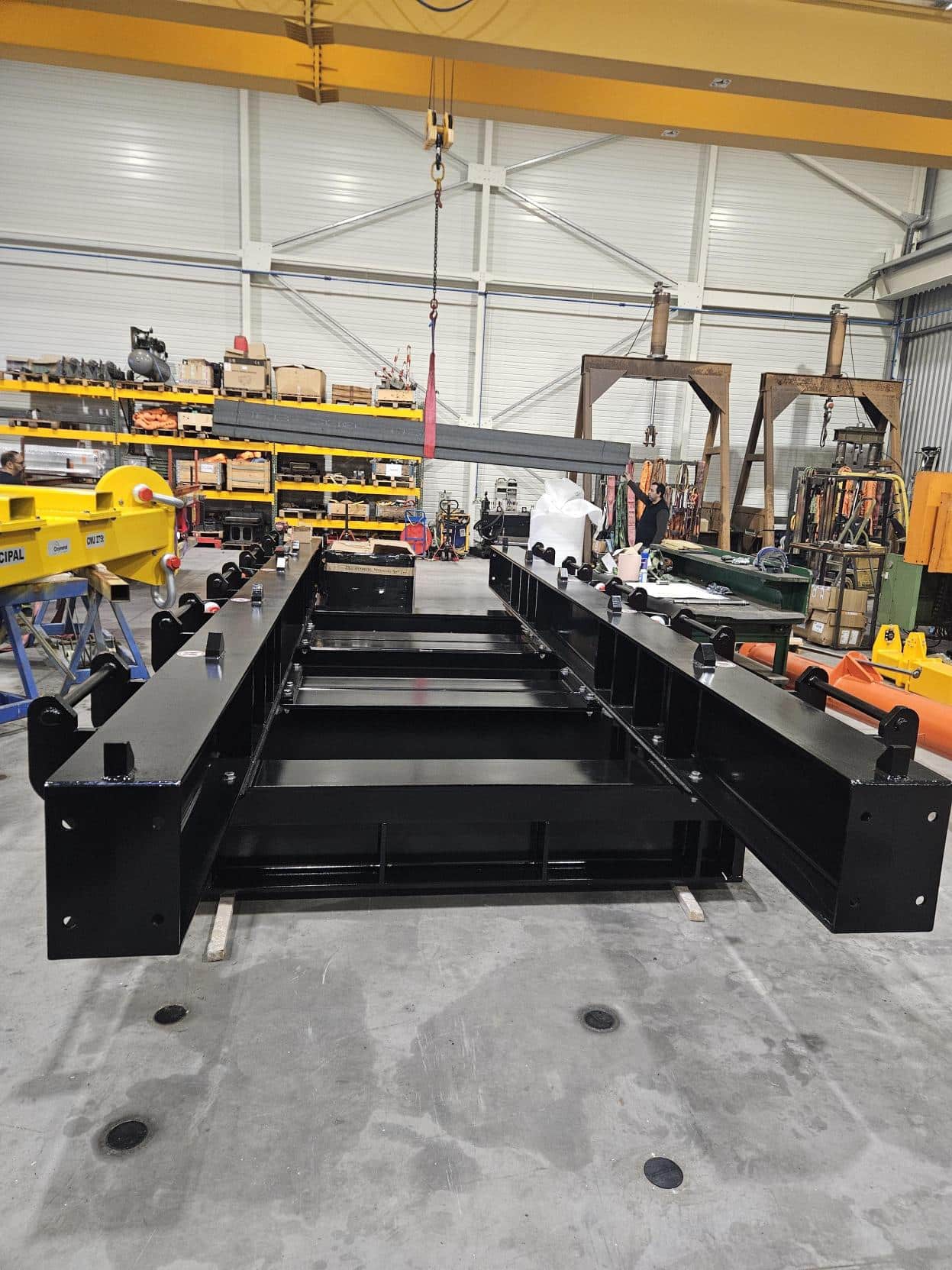
The cradle integrates all the equipment required for its operation. It notably features housings for ENERPAC-type hydraulic jacks, forklift handling sleeves, ballast weight stops and lashing rings, plus chequered plate flooring. The operator can therefore lift the cradle in four distinct modes.
Four lifting modes for optimised operation
The test bench offers great operational flexibility through its four lifting modes. The operator can first lift it under load via the frame lifting beam. Alternatively, four ENERPAC-type hydraulic jacks provide a second option. A third mode furthermore enables empty lifting via forklift truck. Finally, four of the eight textile slings supplied provide a fourth empty lifting mode.
The engineering department sizes each test bench according to the specific constraints of the application. It takes into account the maximum required capacity, the type of equipment to test and the operating environment. CIPAL delivers every unit with a complete technical file: design review plan, CE declaration of conformity, operating instructions and CE marking.